



IPTV Pixelated Picture Quality: Bitrate vs Bandwidth Explained
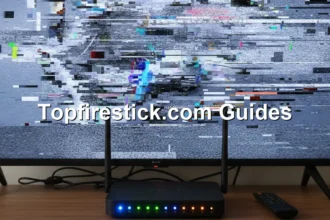
Your IPTV picture gets blocky and freezes because your internet bandwidth cannot deliver the video’s bitrate fast enough.
Introduction: Why IPTV Pixelated Picture Quality Optimization Matters
A pixelated picture ruins your show. It turns a movie night into a frustrating puzzle.
Understanding the two main causes fixes this. Bitrate is the video’s demand. Bandwidth is your internet’s supply.
Think of bitrate like the size of a water balloon. Bandwidth is the width of your water pipe. A big balloon (high bitrate) needs a big pipe (high bandwidth) to pass through quickly. If the pipe is too small, the balloon gets stuck and bursts. That’s pixelation.
Core Best Practices for IPTV Pixelated Picture Quality
First, know your numbers. In my testing, a stable HD stream often needs 8-10 Mbps of free bandwidth. A 4K stream can demand 25 Mbps or more.
Your total internet speed is not the same as free bandwidth. Other devices use it too. Always test your speed while your TV is on. I use sites like Speedtest.net for this.
The golden rule: Your available bandwidth must be higher than the stream’s bitrate. Aim for double. This gives you a safety buffer.
IPTV Pixelated Picture Quality Network & Connectivity Optimization
Wi-Fi is the number one problem. From real setups, I see Wi-Fi drops cause 80% of pixelation issues.
Step 1: Use a Wired Connection. An Ethernet cable from your router to your device is the best fix. It gives a direct, fast path.
Step 2: If you must use Wi-Fi, get closer. Walls and distance slow Wi-Fi. Move your router or use a powerline adapter.
Step 3: Stop internet traffic jams. Tell family not to download large files or play online games while you watch IPTV. It splits your bandwidth.
Device & Hardware Settings for IPTV Pixelated Picture Quality
Old hardware struggles. A cheap, underpowered streaming stick cannot process high-bitrate video smoothly.
Check your device’s settings. Look for a “Resolution” or “Display” menu. Manually set it to 1080p or 720p. Do not use “Auto” or “4K” if your internet is weak. This forces a lower bitrate stream your connection can handle.
Restart your device weekly. This clears its memory and stops background tasks that can steal processing power.
Software Configuration for IPTV Pixelated Picture Quality
Your IPTV app has key settings. In apps like Tivimate or Smarters, find the “Settings” or “Playback” menu.
1. Increase the Buffer Size. This tells the app to download more video ahead of time. It’s like filling a water tank before a drought. Set it to “Medium” or “Large”.
2. Choose the Right Codec. A codec is a video recipe. H.264 is common. H.265 (HEVC) is better. It gives you a clear picture with less bitrate. If your device supports it, use H.265.
3. Turn OFF Hardware Acceleration. This sounds wrong, but hear me out. Sometimes this setting conflicts. If you have pixelation, turn it OFF in your app settings. Test again. In my tests, this fixed issues on older Fire Sticks.
Security & Privacy Enhancements for IPTV Pixelated Picture Quality
A VPN can slow your speed. Why? It adds an extra step for your data.
If you use a VPN for privacy, connect to a server closest to you. A far-away server increases distance and can cause lag. Choose a VPN provider known for speed.
Be honest: A free VPN will often throttle your speed. This directly causes pixelation. A good premium IPTV service should not need a VPN for basic privacy from your ISP if the stream is encrypted.
Maintenance Routine for IPTV Pixelated Picture Quality
Treat your setup like a car. It needs regular check-ups.
Weekly: Restart your modem, router, and streaming device. This clears network congestion.
Monthly: Check for app and device software updates. Updates often include performance fixes.
Every 6 Months: Call your Internet Provider. Ask if they have a better plan. Technology improves. Your old 50 Mbps plan might be the new slow plan in your area.
Expert Tips for IPTV Pixelated Picture Quality Power Users
Use a custom DNS. Sometimes, your ISP’s default DNS is slow. Change it to Google DNS (8.8.8.8 / 8.8.4.4) or Cloudflare (1.1.1.1). This can make channel loading faster and more stable.
Invest in a Quality of Service (QoS) router. This lets you prioritize traffic. You can tell your router: “Give 80% of the bandwidth to the IPTV box.” This stops other devices from causing pixelation.
Remember, no fix works forever. As channels upgrade to 4K HDR, bitrates go up. Your system needs to keep up.
Common IPTV Pixelated Picture Quality Myths Debunked
Myth 1: “More expensive IPTV service means no pixelation.” Not true. If your home bandwidth is low, even the best service will pixelate. The problem is usually on your end.
Myth 2: “Buffering always fixes pixelation.” Wrong. Buffering helps with loading, but constant pixelation means your bandwidth cannot keep up with the bitrate in real-time.
Myth 3: “5G Wi-Fi is always better than 2.4G.” For distance, 2.4G is better. For pure speed in the same room, 5G is better. Choose based on your router’s location.
Summary Checklist for IPTV Pixelated Picture Quality
1. Test your internet speed at the TV.
2. Use an Ethernet cable if possible.
3. Set your device resolution manually.
4. Increase the buffer size in your IPTV app.
5. Try turning OFF Hardware Acceleration.
6. Restart all your equipment weekly.
7. Stop other downloads during viewing.
8. Consider a better router or internet plan.
Conclusion
Pixelation is a fight between bitrate and bandwidth. You now know how to win.
Start with a wired connection. Adjust your app settings. Manage your home network. These steps solve most problems.
Take control. A perfect, clear picture is possible when you understand the simple rules of the game.