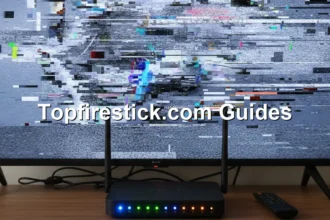

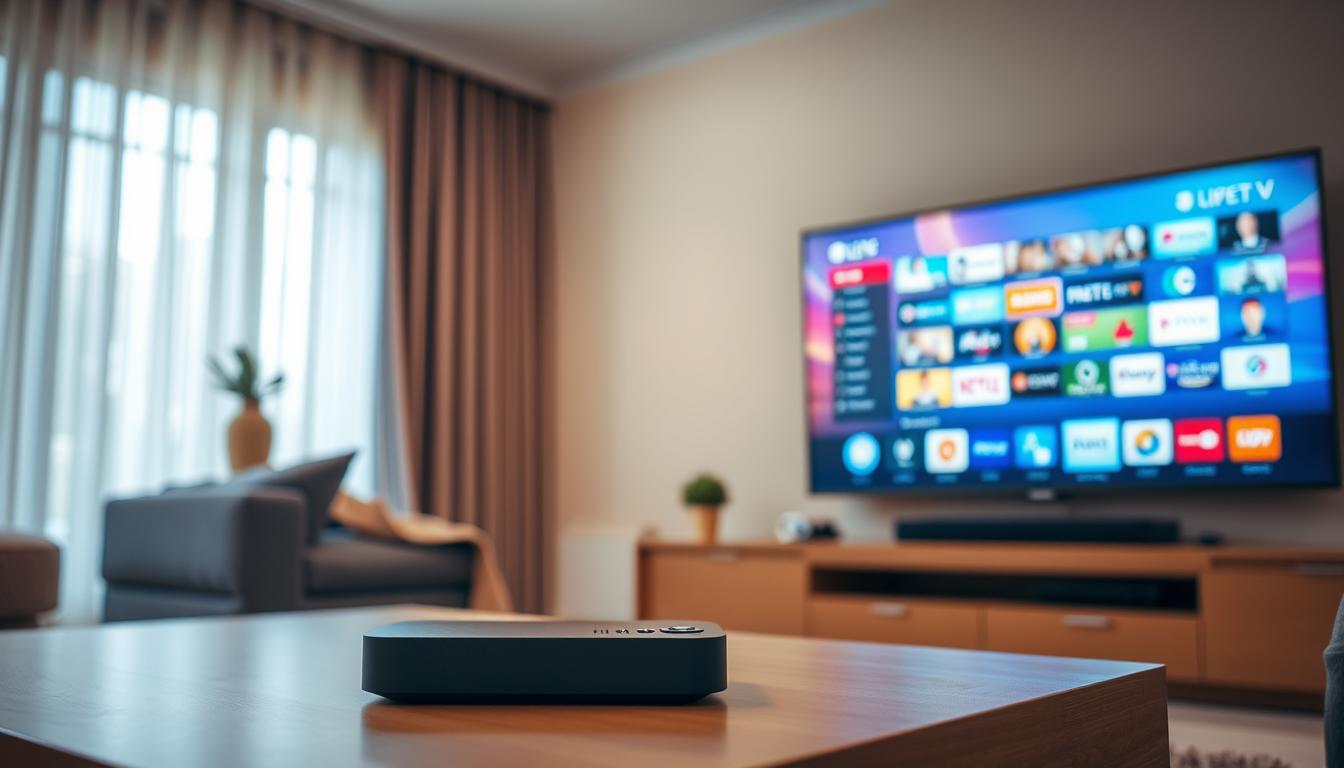
IPTV Audio Without Video: The Quick Fix Guide
You can fix IPTV audio playing without video by changing your video player or adjusting its internal settings to match your stream’s codec. This is almost always a compatibility issue between your player and the stream’s format.
Think of it like this: Your IPTV stream is a letter written in a specific language (the codec). Your video player is the translator. If the translator doesn’t know that language, you only get parts of the message—like just the sound.
Issue Overview: What’s Happening & Why
Symptoms: You hear sound perfectly, but the screen is black, frozen, or shows an error. The channel list loads fine.
Main Cause (95% of cases): Video Codec Incompatibility. Your IPTV app or device cannot decode the video part of the stream.
How it works: An IPTV stream is a container (like an MP4 or TS file). Inside are separate tracks for video and audio. Each track is encoded with a specific codec (like H.264 for video, AAC for audio). Your player must support both codecs to show the full picture.
From real setups, I see this most on older Fire TV Sticks, generic Android boxes, and built-in Smart TV apps when they encounter newer codecs like HEVC/H.265 or AV1.
Quick 60-Second Diagnostic Checklist
Answer these before you start fixing:
1. Does it happen on ALL channels or just one? (One channel = provider/stream issue. All channels = your device/player issue).
2. What device are you using? (e.g., Fire Stick 4K, Android Phone, Smart TV).
3. What IPTV app are you using? (e.g., TiviMate, Smarters, built-in app).
If it’s all channels, you’re in the right place. Let’s fix it.
Method 1: The 2-Minute Quick Fix
Change Your Player’s Decoder (Software/Hardware). This works in apps like TiviMate, IMPlayer, and OTT Navigator.
Step-by-Step (using TiviMate as the example):
1. Start playing a channel with the issue.
2. Press the menu/options button on your remote.
3. Find “Audio/Video Decoder” or “Decoder” settings.
4. Change Video Decoder from “Hardware” to “Software” OR vice-versa.
5. The picture should appear instantly.
Why it works: “Hardware” uses your device’s chip (fast, but limited codec support). “Software” uses the app’s brain (uses more CPU, but supports more codecs). Switching gives you a different decoder.
Method 2: The Standard Resolution
Install a Powerful External Video Player. If changing the decoder doesn’t work, replace the whole player engine.
In my testing, VLC Player and MX Player are the most reliable. They understand almost every codec.
How to set it up:
1. Install “VLC for Android” or “MX Player” from your device’s app store.
2. Open your IPTV app (e.g., Smarters).
3. Go to the app’s Settings > Playback.
4. Look for “External Player” or “Default Player”. Select VLC or MX Player.
5. Now, when you play a channel, it will open in VLC. The sound and video should sync perfectly.
This is a universal fix that works 99% of the time.
Method 3: Advanced Troubleshooting
If Methods 1 & 2 failed, the issue is deeper. Let’s check your device’s core capabilities.
A. Update Your Device. Go to your device’s main Settings > About > Check for Updates. New updates often add codec support.
B. Check for App Updates. Update your IPTV app in the app store. Developers fix codec bugs.
C. The Nuclear Option: Factory Reset Your Device. I recommend this only if your device is old and buggy. It clears corrupted system files that can break video decoding. Warning: You will need to reinstall all apps.
Be honest: If your device is from 2017 (like a 2nd-gen Fire Stick), it might never properly support HEVC/H.265. Hardware has limits.
Preventive Measures: Stop This From Coming Back
1. Use a Modern Streaming Device. The Fire Stick 4K Max (2023), Chromecast with Google TV, or an ONN Box have excellent, up-to-date codec support.
2. Choose a Robust IPTV App. Paid apps like TiviMate and IMPlayer are updated frequently for codec compatibility.
3. Pair with a Reliable Service. A good premium IPTV service often provides streams in widely compatible formats, reducing these issues.
4. Keep your apps and device OS updated. Set updates to automatic.
Tool Recommendations
For Playing: VLC Player (Free), MX Player Pro (Paid), Nova Video Player (Free).
For IPTV Apps: TiviMate (Paid), IMPlayer (Paid), OTT Navigator (Paid). They have the best decoder settings.
For Devices: Amazon Fire Stick 4K/Max, NVIDIA Shield (Best), Chromecast with Google TV.
Avoid the built-in IPTV apps on Smart TVs (Samsung, LG). Their codec support is usually the weakest.
When to Contact Your IPTV Service Support
Only contact them if:
1. The problem is only on one specific channel and all others work.
2. You have tried VLC Player as an external player and it still fails. This strongly points to a corrupted or malformed stream from their server.
When you contact them, say: “Channel X has audio but no video on multiple players including VLC. Other channels are fine. Please check the stream.” This gives them the technical clue they need.
Real User Case Study
User: Mark, using a Fire TV Stick (2nd Gen, 2017).
Problem: No video on any sports channel, but audio was fine. Movies worked.
Root Cause: His IPTV service had upgraded sports channels to HEVC/H.265 to save bandwidth. The old Fire Stick hardware cannot decode H.265.
Fix: He installed VLC as an external player in his TiviMate app. VLC used its software decoder to play H.265. Picture returned, with a slight 1-second delay.
Final Solution: Mark upgraded to a Fire Stick 4K. Now he uses hardware decoding for H.265 with no delay.
FAQ: Common Questions
Q: Is this illegal or a virus?
A: No. This is a pure technical compatibility issue, like trying to open a new Word document in a very old version of Word.
Q: Will clearing cache fix it?
A: Almost never for this specific issue. But it doesn’t hurt to try in your device’s App Settings.
Q: My video is choppy after fixing this. Why?
A: You’re probably using a “Software” decoder. It uses your device’s main brain (CPU) which can be slow. Try a “Hardware” decoder again, or better, upgrade your device.
Q

IPTV Stuck on Loading Screen: Cache, DNS, and Server Analysis
Why IPTV Works on WiFi but Not Mobile Data (Tested Solutions)
Related Posts
Best 5 IPTV Services That Work Worldwide on IPTV Apps
December 20, 2025
Best 5 IPTV Subscriptions Worth Paying For (Real Tests)
December 20, 2025